Jackets (for piers)
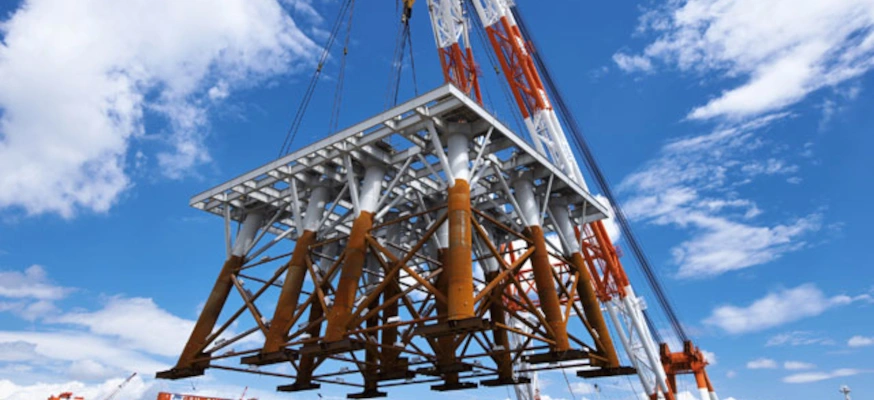
In this method, piles are driven into the legs of a three-dimensional truss structure assembled from steel pipes and fixed to the seabed ground, and the piles and legs are welded or grouted together.
The piles are covered with a jacket, which is called a 'jacket' in the sense that it is worn over the piles.
Features of the method
- 1Advantageous in deep water and soft ground
- 2Rapid on-site construction
- 3High earthquake resistance
- 4Environmentally friendly
jacketed pier (construction method overview)
1.Overview
A jacket pier is a pier consisting of a foundation pile covered with a truss constructed of steel pipes.
(It is called a "jacket" in the sense of wearing.)
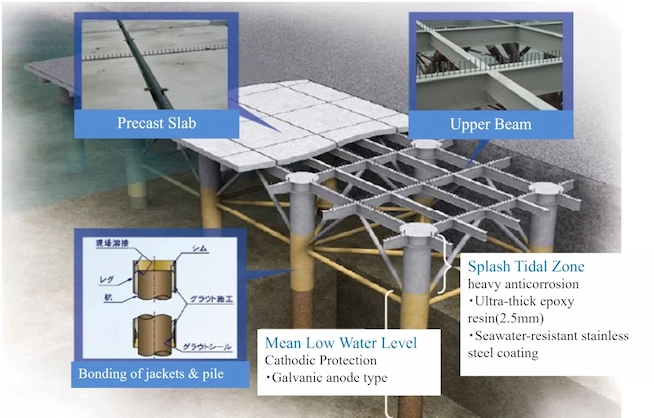
jacketed pier (construction method overview)
2.Characteristics
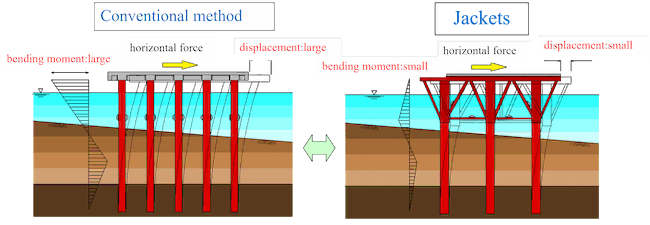
- 1High horizontal rigidity (three-dimensional truss structure)
- 2Pile spacing can be extended (fewer piles)
⇒ Suitable for deep water, earthquake resistance, soft ground, and rapid construction
jackets with other functions
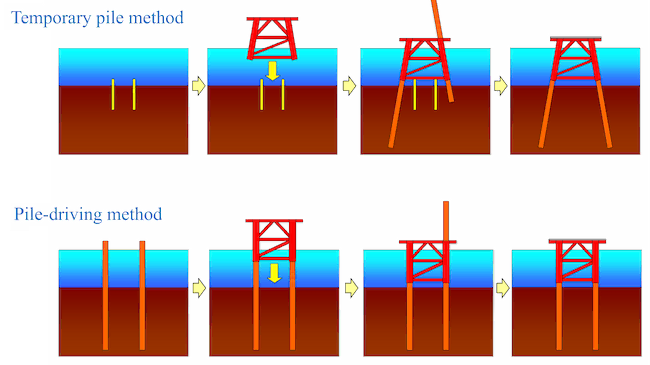
jacketed pier (construction method overview)
3.jackets with other functions
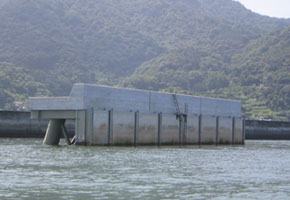
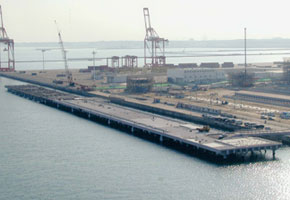
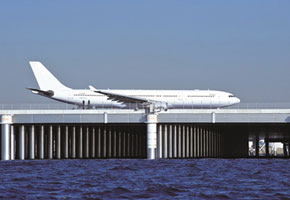
(Lined with super stainless steel)
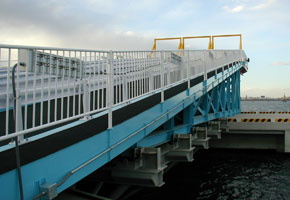
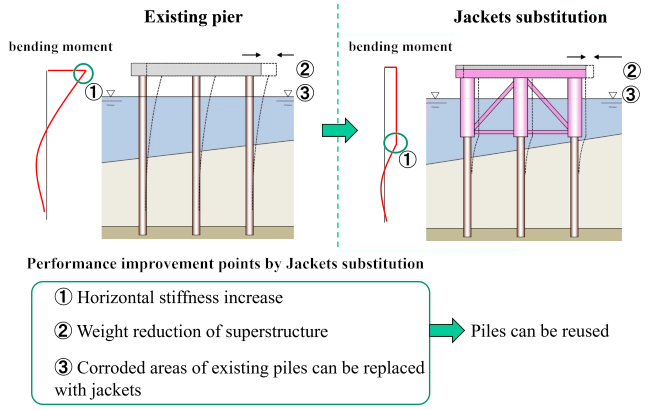
Method of improving existing piers with jackets
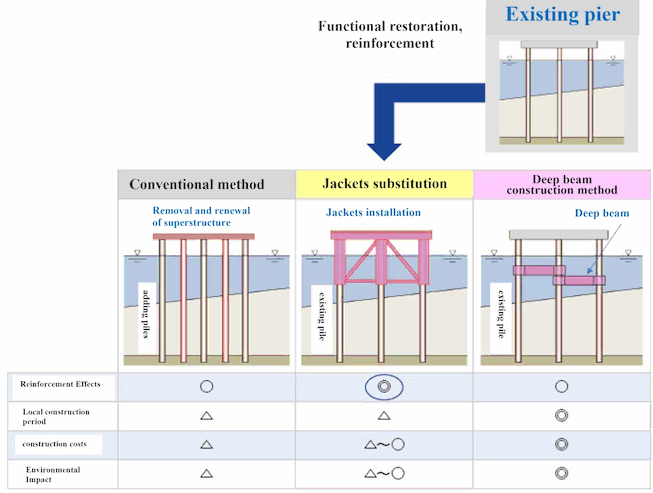
Existing wharves can be improved economically and in a short construction period by using a rigid jacket as a method of improving, seismically strengthening and renewing the superstructure.
- 1Economic and seismic strengthening is possible by utilising existing piles.
- 2Easy and rapid on-site construction
Jacket replacement method (reinforcement of existing piers)
4.Reinforcement method for existing pier (Jackets substitution)
About jackets for work jetties
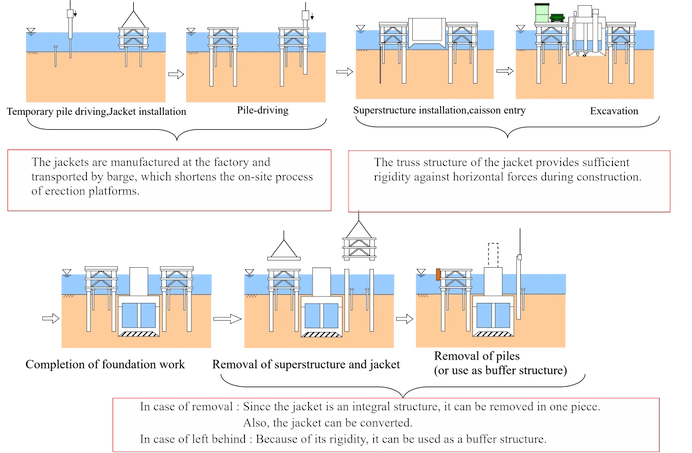
Jackets are also used for temporary structures such as temporary jetties for offshore construction work.
- 1More economical than other types when water depths are large.
- 2Fewer piles need to be driven than with piled piers, etc., enabling rapid construction on site.
- 3High rigidity makes it strong against horizontal forces during construction, improving safety.
- 4Can be used as a buffer after construction.
Jacket for Work Platforms
Example of application of jackets for work platforms in pneumatic caisson construction
Construction examples
Yokohama Port Honmoku Area Quay (-16 m) (earthquake resistant) construction work
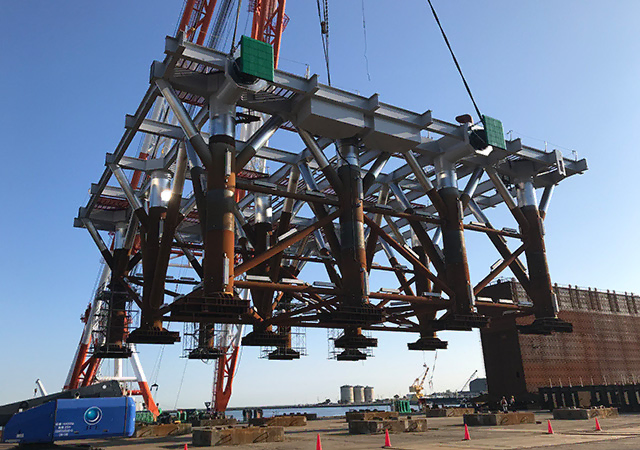
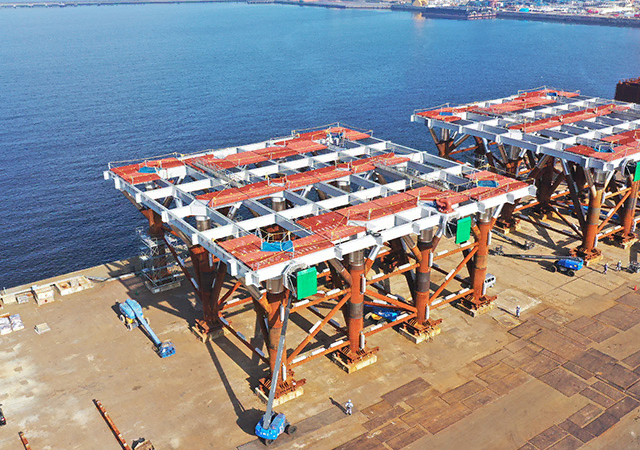
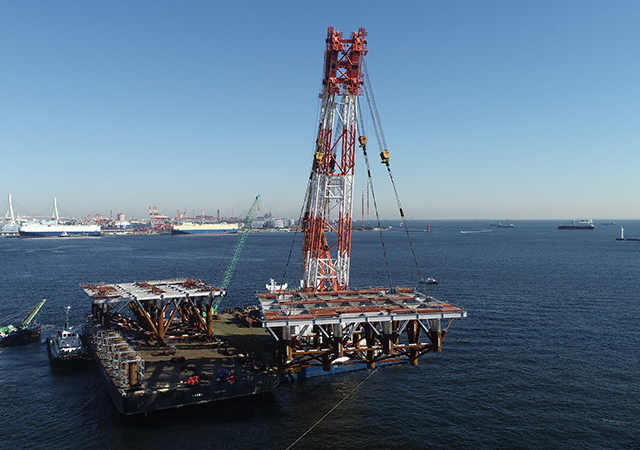
| Client | Kanto Regional Development Bureau, Ministry of Land, Infrastructure and Transport |
|---|---|
| Purpose and function | Quay (-16 m) |
| Year of construction | 2020 |
| Dimensions | L40×B38.0×H15.3 |
| Number of units | 2 units |
| Weight | - |
| Steel weight | 650 t/unit |
| Concrete volume | - |
| Design overview | Design depth (-16 m) |
| Features/functions | Container berths |
Emergency rehabilitation of the Yokohama Harbour Road (Hama Road)
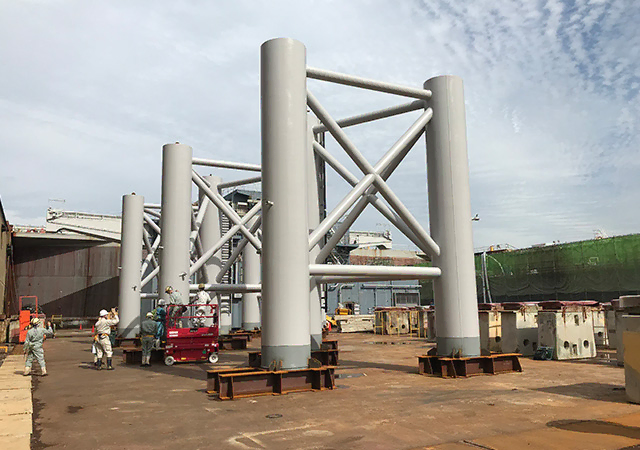
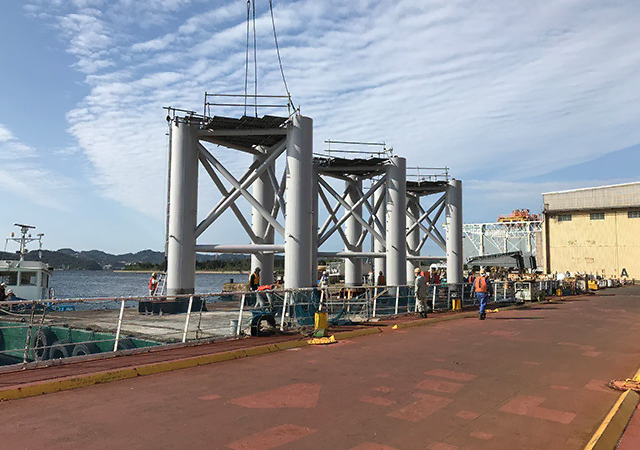
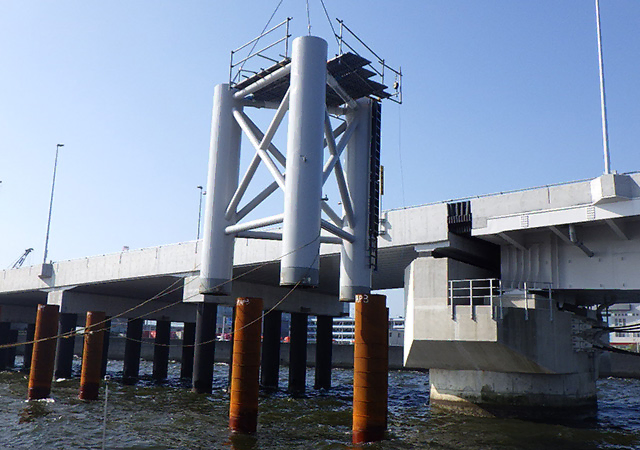
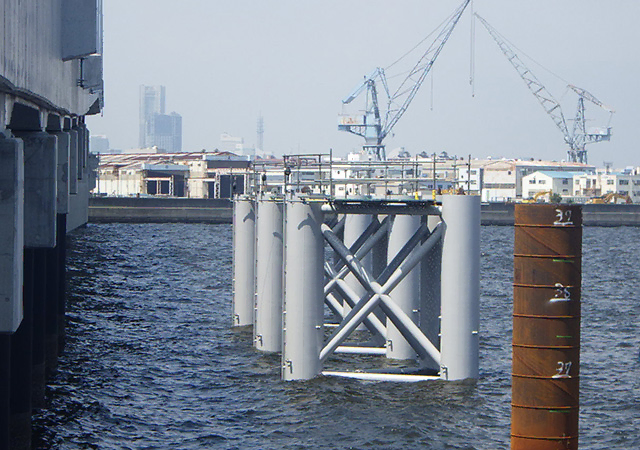
| Client | Kanto Regional Development Bureau |
|---|---|
| Purpose and function | Impact prevention works |
| Year of construction | 2020 |
| Dimensions | L6*B6*H7.5 |
| Number of units | 10 unit |
| Weight | - |
| Steel weight | 15 t/unit |
| Concrete volume | - |
| Design overview | - |
| Features/functions | Impact protection for piers and bridge girders (especially PC sections) |
Motobu Port (Honbu area) Quay (-10.5 m) maintenance work (H 30-1)
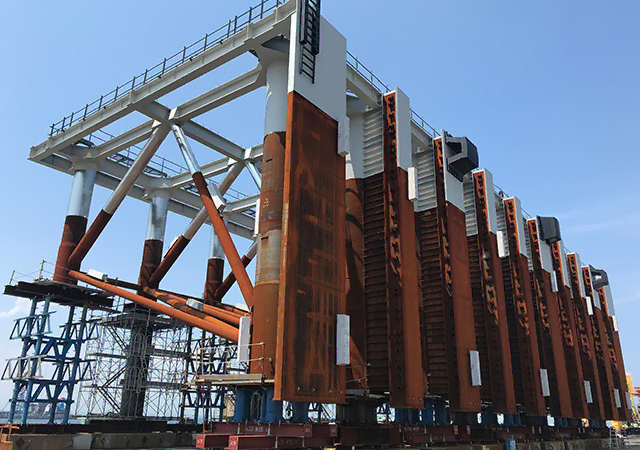
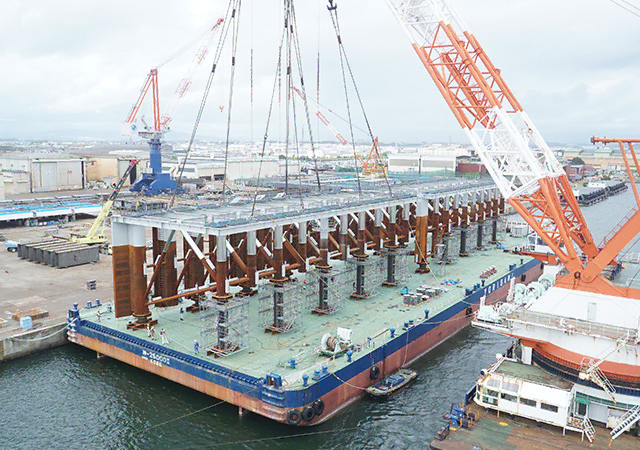
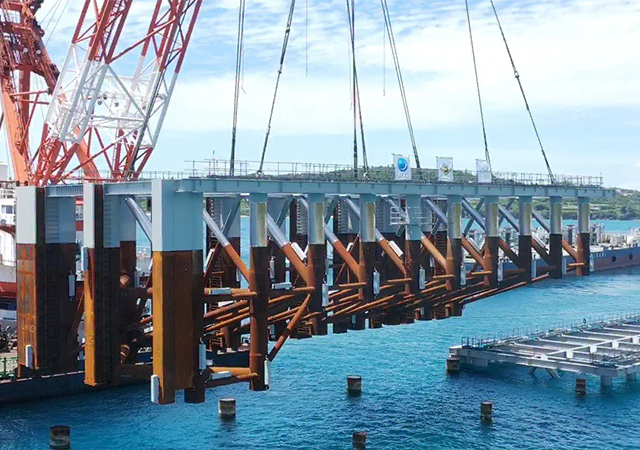
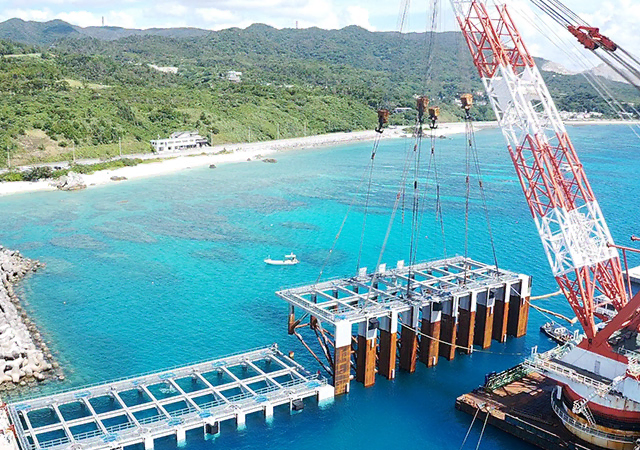
| Client | Okinawa Prefecture |
|---|---|
| Purpose and function | Quay (-10.5 m) |
| Year of construction | 2019 |
| Dimensions | ①L50.0*B20.0*H12.0 ②L50.0*B20.0*H12.0 |
| Number of units | 2 unit |
| Weight | - |
| Steel weight | ①510 t/unit ②625 t/unit |
| Concrete volume | - |
| Design overview | Design depth (-10.5 m) |
| Features/functions | Cruise ship berths |
Mizushima Port Tamashima Area Quay (-12 m) Construction (Part 4)
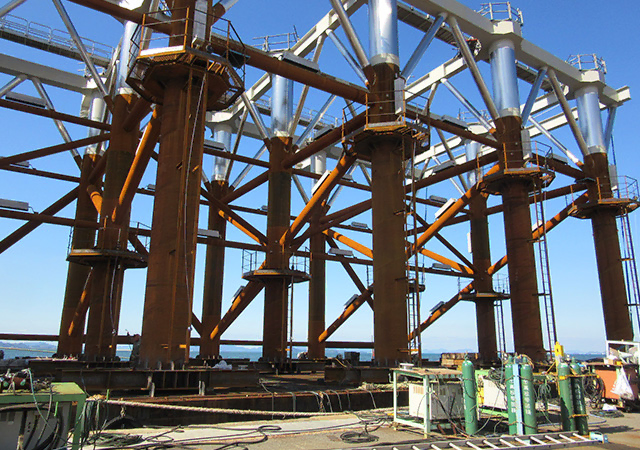
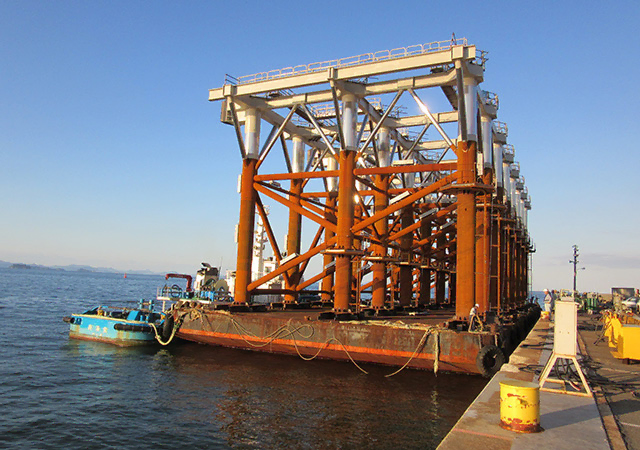
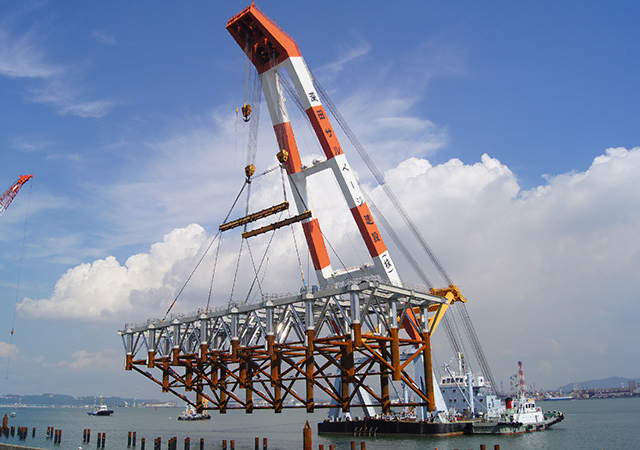
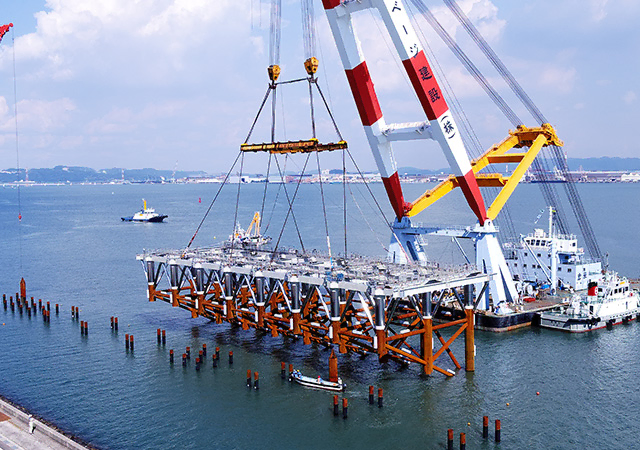
| Client | Chugoku Regional Development Bureau, Ministry of Land, Infrastructure and Transport |
|---|---|
| Purpose and function | Quay wall (-12 m) |
| Year of construction | 2018 |
| Dimensions | L64.0*B20.0*H14 |
| Number of units | 2 units |
| Weight | - |
| Steel weight | 380 t/unit |
| Concrete volume | - |
| Design overview | Design depth -12 m |
| Features/functions | Container berths |
Construction of new passenger boat wharf quay at Lot 13 in 2017 (Part 1)
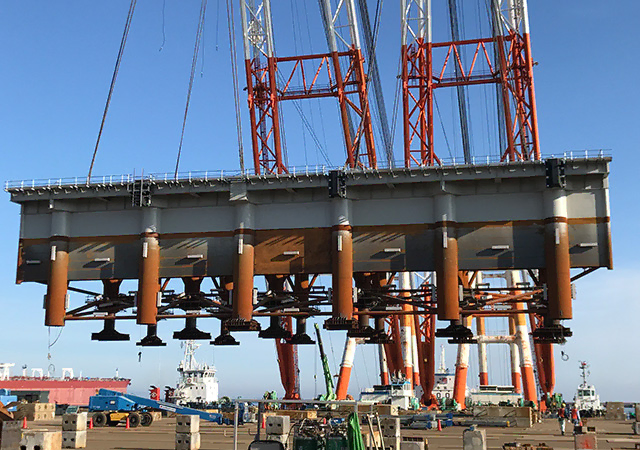
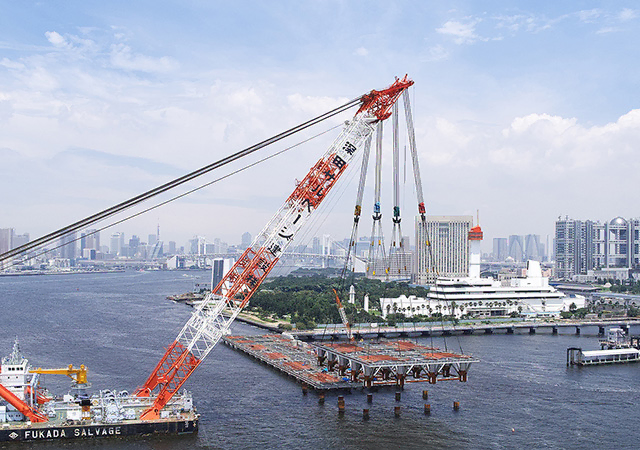
| Client | Tokyo Metropolitan Government |
|---|---|
| Purpose and function | Quay (-11.5 m) |
| Year of construction | 2017 |
| Dimensions | L60.0*B30.0*H13.85 |
| Number of units | 4 units |
| Weight | - |
| Steel weight | approx.810 t/unit |
| Concrete volume | - |
| Design overview | Design depth -11.5 m |
| Features/functions | Cruise ship berths |
Shinko Wharf No. 9 quay improvement works (No. 3, main body fabrication and substructure)
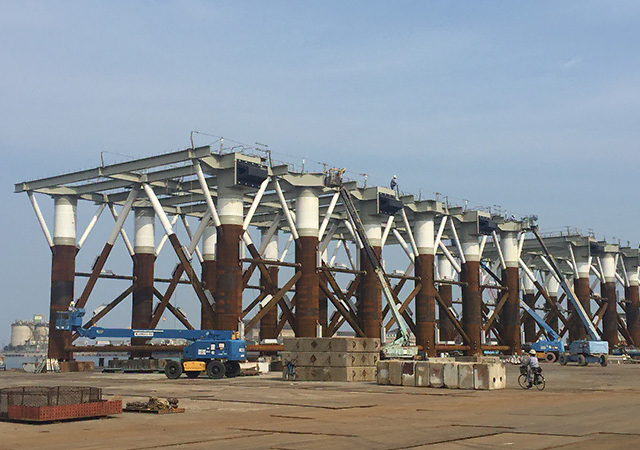
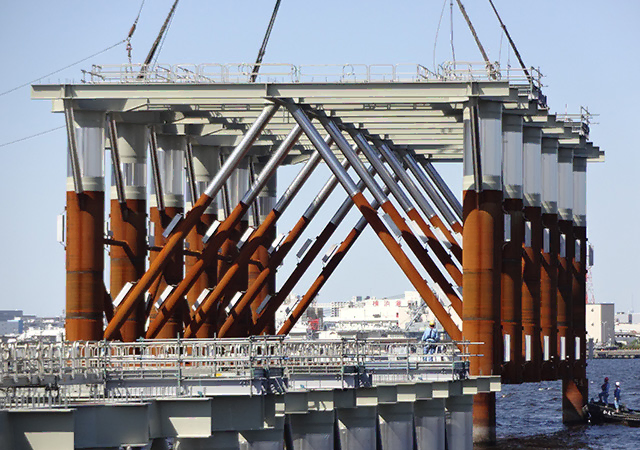
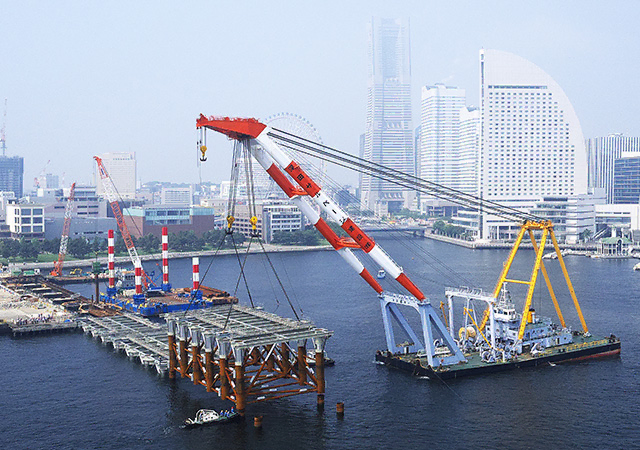
| Client | Yokohama City |
|---|---|
| Purpose and function | Quay (-9 m) |
| Year of construction | 2017 |
| Dimensions | ①L45.0*B20.0*H12.45 ②L44.0*B20.0*H5.0 ③L38.0*B20.0*H5.0 |
| Number of units | ①2 units ②1 unit ③1 unit |
| Weight | - |
| Steel weight | ①330 t/unit ②260 t/unit ③245 t/unit |
| Concrete volume | - |
| Design overview | Design depth - 11.3 m |
| Features/functions | Cruise ship berths |
Port of Kushiro West Port - 14 m quay B section upper part construction work
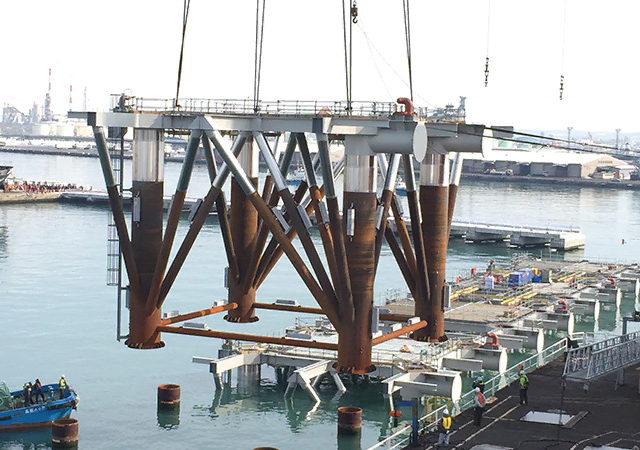
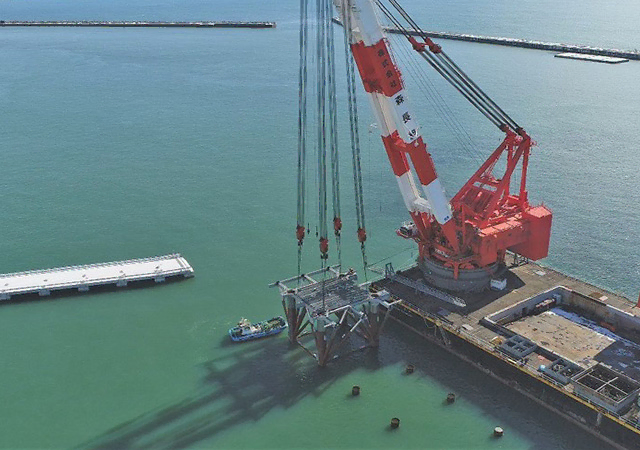
| Client | Hokkaido Development Bureau, Ministry of Land, Infrastructure and Transport |
|---|---|
| Purpose and function | Quay (-14 m) |
| Year of construction | 2016 |
| Dimensions | L25*B20*H14 |
| Number of units | 3 units |
| Weight | - |
| Steel weight | 160 t/unit |
| Concrete volume | - |
| Design overview | Design depth -14 m |
| Features/functions | Berths for Panamax vessels |
Toyama Shinko Thermal Power Station LNG Unit 1 Jetty
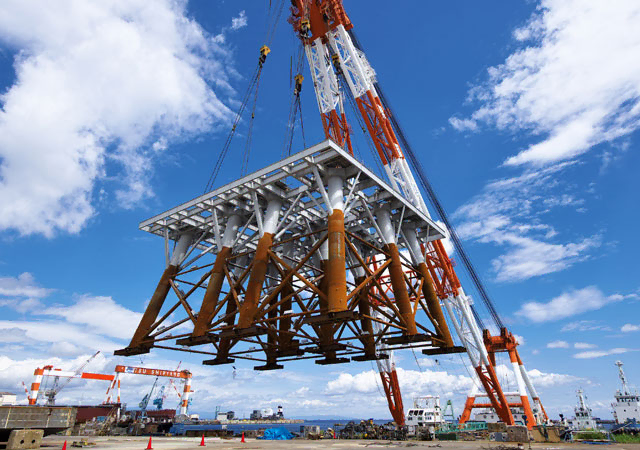
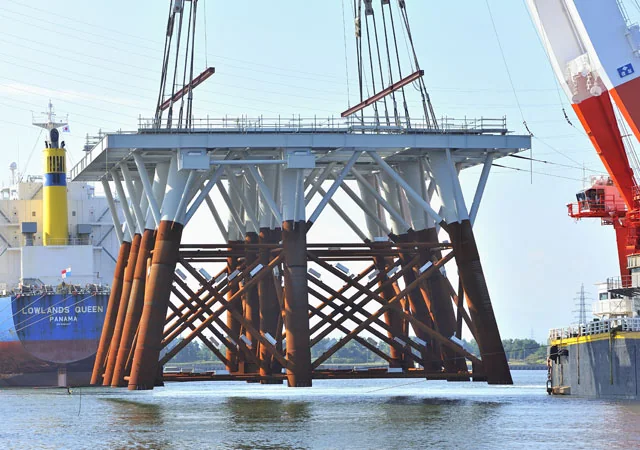
| Client | Hokuriku Electric Power Company |
|---|---|
| Purpose and function | LNG working platform |
| Year of construction | 2014 |
| Dimensions | Length 32.5 x width 37.0 x height 19.0 m (number of legs 12) |
| Number of units | 1 unit |
| Weight | - |
| Steel weight | 840 t/unit |
| Concrete volume | Grout 47 m3/unit |
| Design overview | Design seismic load L1 |
| Features/functions | Diagonal pile type |
Ishinomaki Fishing Port - 7.0 m jetty outside disaster restoration (Part 2)
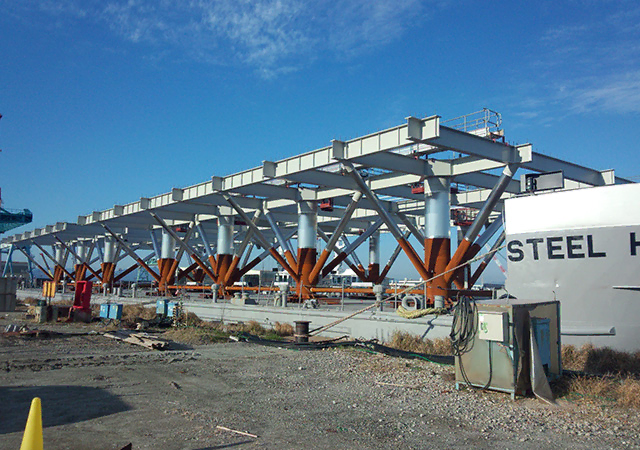
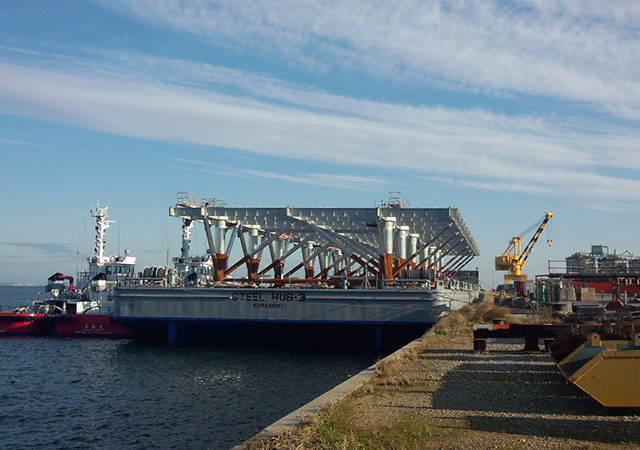
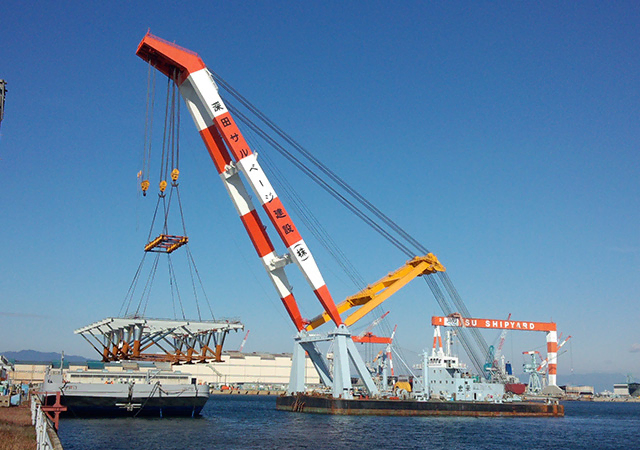
| Client | Miyagi Prefecture |
|---|---|
| Purpose and function | Quay (-7 m) |
| Year of construction | 2012 |
| Dimensions | L40*B38.0*H5.5 |
| Number of units | 12 units |
| Weight | - |
| Steel weight | 140 t/unit |
| Concrete volume | - |
| Design overview | Design depth -7 m |
| Features/functions | Rehabilitation of a damaged (sunken) pier by raising it |
Sakaide LNG Terminal Impulse Protection Jacket Fabrication
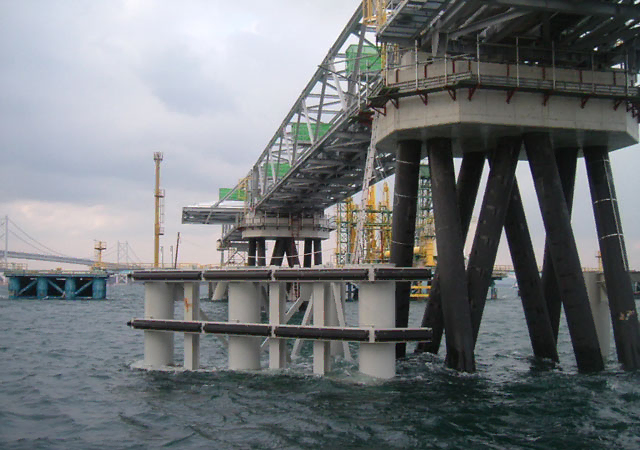
| Client | Sakaide LNG Company, Incorporated |
|---|---|
| Purpose and function | Protective construction |
| Year of construction | 2007 |
| Dimensions | L8.2 x W8.2 x H7.0 m (number of legs 4) |
| Number of units | 4 units |
| Weight | - |
| Steel weight | 30 t/unit |
| Concrete volume | Grout 7 m3/unit |
| Design overview | Design seismic intensity 0.18 |
| Features/functions | Impact protection for the foundations of the pipeline connection bridge |
Fushiki Toyama Port (Shin-Minato Area) Road (East-West Line) Work Jetty Construction
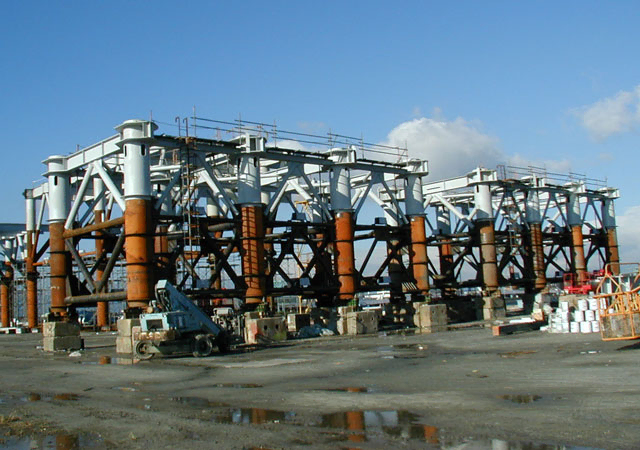
| Client | Hokuriku Regional Development Bureau, Ministry of Land, Infrastructure and Transport |
|---|---|
| Purpose and function | Work pier |
| Year of construction | 2003 |
| Dimensions | L18.0 x W10.0 x H8.0 m |
| Number of units | 2 units |
| Weight | - |
| Steel weight | 87 t/unit |
| Concrete volume | - |
| Design overview | Installation depth - 7.0 m, design seismic intensity 0.16 |
| Features/functions | - |
New construction of the Hitachinaka Thermal Power Plant Lifting coal jetty
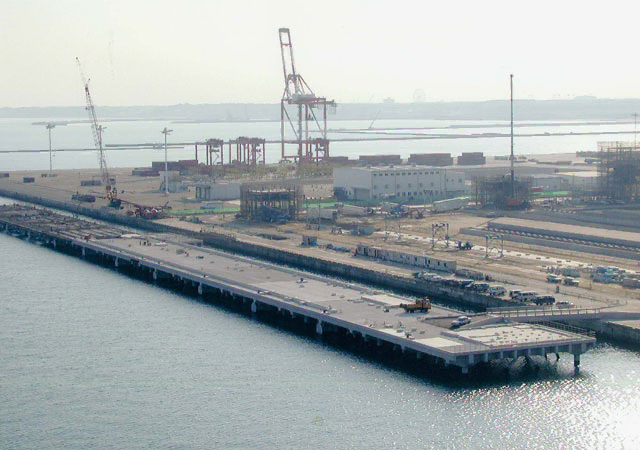
| Client | Electric Power Development Co.,Ltd. |
|---|---|
| Purpose and function | Quay (-19 m) |
| Year of construction | 2000 |
| Dimensions | Length 25.0 x width 32.0 x height 25.0 m (number of legs 12) |
| Number of units | 12 units |
| Weight | - |
| Steel weight | 2560 t/unit |
| Concrete volume | - |
| Design overview | Installation depth -20.5 m |
| Features/functions | Installation type (gravity type) |